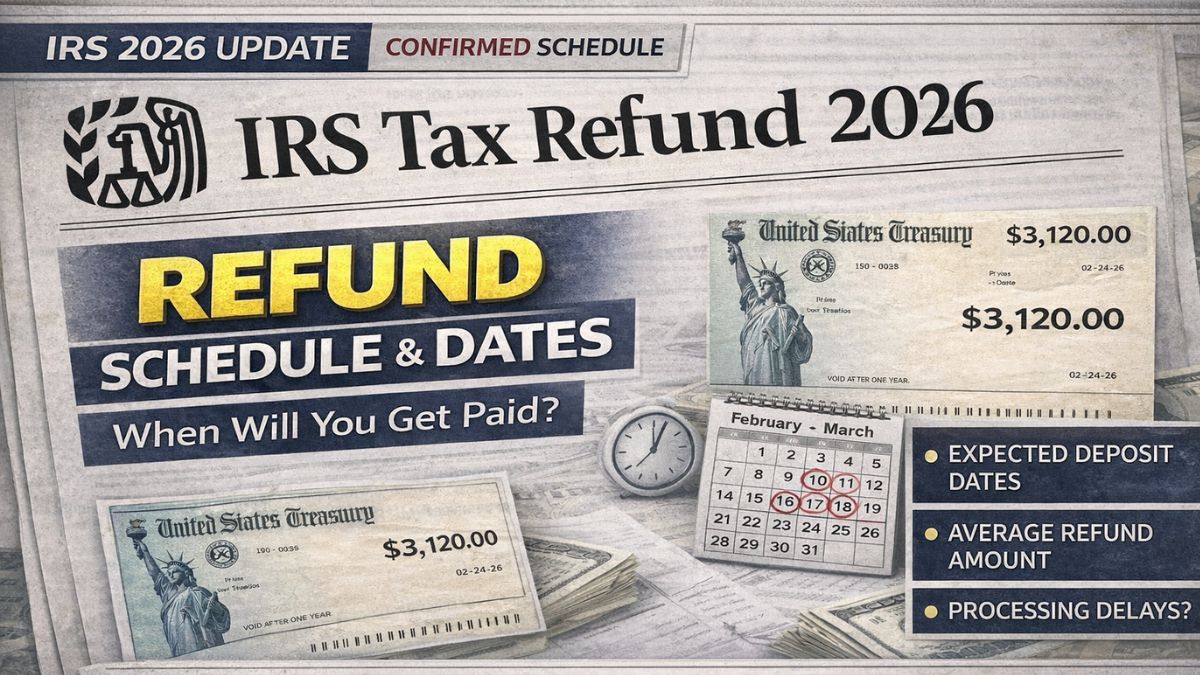
The 2026 tax filing season is approaching, and millions of Americans are preparing their income records, employer forms, and financial documents. For many households, a tax refund plays an important role in their yearly budget. It can help pay essential bills, reduce outstanding debt, increase savings, or manage daily expenses. With living costs still high across the country, taxpayers are paying close attention to the IRS refund schedule.
What a Tax Refund Means
A federal tax refund is issued when the amount of tax paid during the year is higher than the actual tax owed. The Internal Revenue Service reviews your reported income, deductions, and credits to calculate your final tax responsibility. If you paid more through paycheck withholding or estimated payments than required, the remaining balance is returned to you as a refund after processing is completed.
When the IRS Begins Accepting Returns
The IRS typically starts accepting federal tax returns in late January. Once a return is officially accepted, it enters the processing system. Taxpayers who file electronically and choose direct deposit usually receive refunds within about two to three weeks, provided there are no errors or review issues. Paper returns take longer because they must be manually handled before processing even begins.

Why Some Refunds Take Longer
Delays can occur for several reasons. Simple mistakes such as incorrect Social Security numbers, missing income forms, or wrong bank details may slow the process. Returns that claim certain tax credits may also go through additional verification checks. Fraud prevention systems are stronger than ever, which helps protect taxpayers but can add extra processing time if something unusual is detected.
Why Refund Amounts Change Each Year
Refund amounts are not the same every year. Changes in income, tax law updates, and adjustments in credits can affect the final amount. For example, a salary increase or additional side income may change your total tax owed. Differences in withholding throughout the year also play a role in whether you receive a larger refund or owe money.
How to Track Your Refund
The IRS provides an official online tracking tool that allows taxpayers to monitor their refund status. After filing, the system updates through stages such as Return Received, Refund Approved, and Refund Sent. You will need your Social Security number and filing status to check progress. This tool offers the most reliable information about your refund timeline.

Planning Ahead for the Season
Financial experts recommend not depending on a refund for urgent expenses until it is officially approved. While many refunds arrive within weeks, reviews or corrections can extend processing time. Filing early, reviewing all information carefully, and keeping copies of documents can help ensure a smoother process.
Disclaimer: This article is for informational purposes only and does not provide tax, legal, or financial advice. Refund amounts, processing times, and eligibility depend on individual circumstances and official IRS procedures. Tax laws may change, and personal situations vary. For advice specific to your situation, consult official IRS resources or a qualified tax professional before making financial decisions.