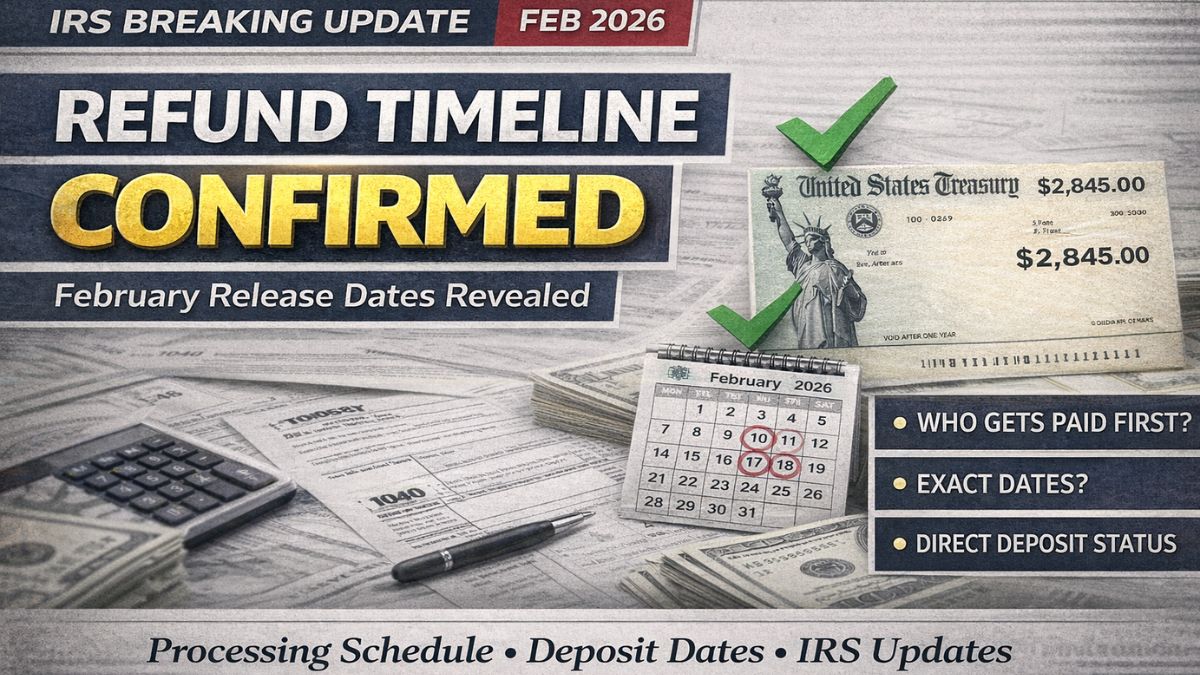
The 2026 tax filing season is underway, and the Internal Revenue Service has confirmed that income tax refunds will begin reaching eligible taxpayers during February. For millions of households, a tax refund is an important financial event. Many people use this money to pay bills, reduce debt, or add to savings. Because of this, understanding how the refund timeline works can help reduce stress and improve financial planning.
When Refunds Begin and How They Are Issued
Refunds are not sent out all at once. Instead, they are released in stages based on when returns are filed and how they are submitted. The IRS has already started accepting tax returns, and refunds are issued after each return is reviewed and approved.
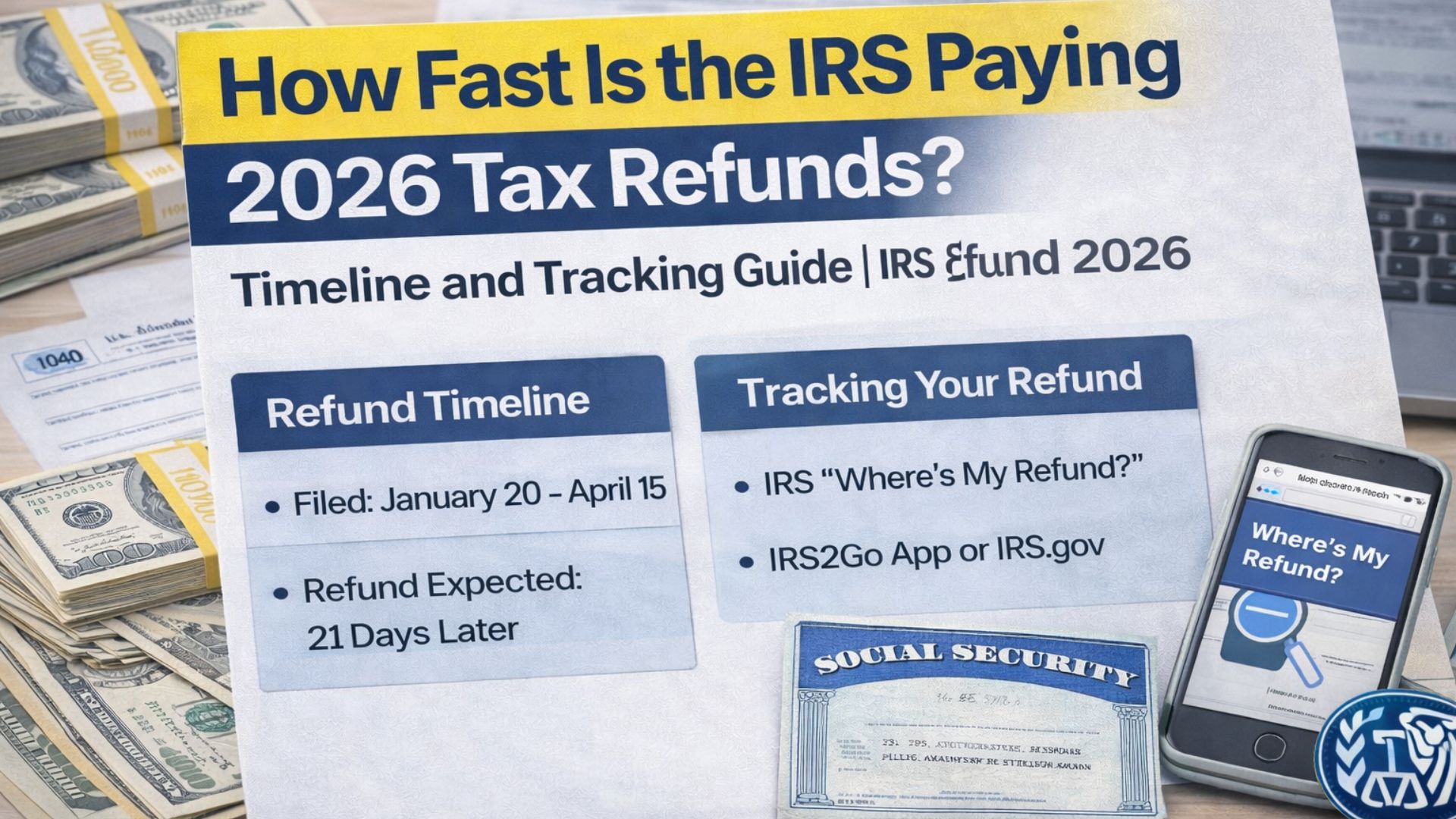
Taxpayers who file early are generally among the first to receive payments, especially if they file electronically and choose direct deposit. In many cases, electronic filers with direct deposit receive refunds within about 10 to 21 days after their return is accepted. Acceptance means the return has passed initial system checks and moved into full processing.

Paper returns follow a slower path. Mailed forms must be opened and entered manually before processing begins. This often adds several extra weeks. Choosing a mailed check instead of direct deposit can also increase waiting time due to postal delivery.
Why Some Refunds Take Longer
Several factors can slow down a refund. Errors such as incorrect Social Security numbers, mismatched income details, or wrong bank account information may cause a return to be reviewed manually. Missing forms or simple calculation mistakes can also delay approval.
Certain refundable credits require additional verification under fraud-prevention rules. These checks are designed to protect taxpayers from identity theft and improper claims. If extra review is required, refunds may arrive later in February or even early March.
यह भी पढ़े:
 IRS Tax Refund 2026 Guide: Processing Timelines, Key Rules, and What Taxpayers Should Expect
Tracking Your Refund
Taxpayers can monitor their refund using the official IRS online tracking tool. The system usually updates within 24 hours after an electronic return is accepted. It shows stages such as return received, refund approved, and refund sent. Using official tools is the most reliable way to get accurate updates.
Planning With Flexibility
While many refunds begin arriving in February, exact timing varies. Filing early, choosing electronic submission, selecting direct deposit, and carefully reviewing information before submitting can help reduce delays.
Disclaimer: This article is for informational purposes only and does not provide tax, legal, or financial advice. Refund amounts and processing times depend on individual tax situations and official IRS procedures. For personalized guidance, consult official IRS resources or a qualified tax professional.