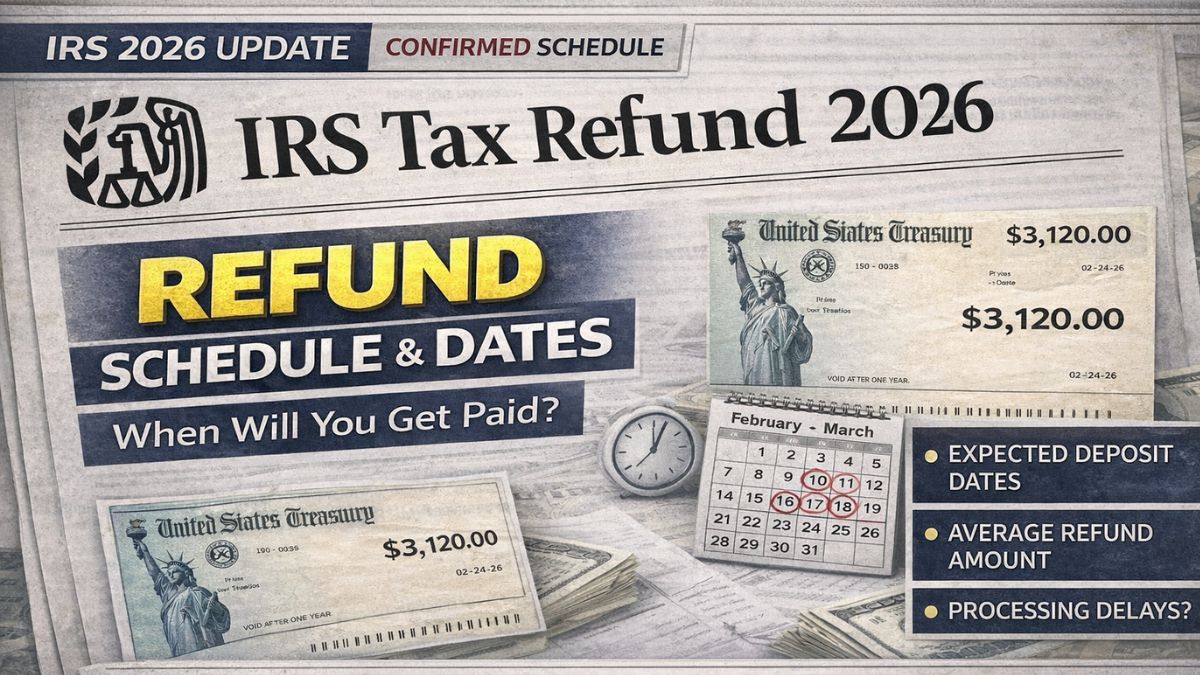
As the 2026 tax season continues, many taxpayers are carefully tracking the IRS refund timeline for February payments. For many households, tax refunds are used to cover bills, reduce debt, or build savings. Knowing how the refund process works and what affects payment timing can help taxpayers plan better and avoid unnecessary worry.
How the IRS Processes Tax Returns
After a tax return is submitted, it first enters the IRS system and is officially acknowledged. The return then goes through a series of automated checks to confirm income details, Social Security numbers, dependent information, and eligibility for credits. In some cases, manual review may also be required. If everything is accurate and complete, the refund is approved and scheduled for payment. However, if the system detects errors, missing documents, or information that requires further verification, the timeline may be extended.
Standard Refund Timeline for February 2026
For taxpayers who file electronically and select direct deposit, refunds are typically issued within about 21 days. This three-week window applies to returns that are accurate and do not require additional review. Direct deposit remains the fastest way to receive payment because funds are transferred directly into a bank account without mailing delays.
यह भी पढ़े:
 When are Social Security and SSI paid in February 2026? This month’s complete benefits schedule
Paper filers should expect longer wait times. Since paper returns must be handled manually, processing takes more time, especially during peak filing periods when the IRS receives a high volume of submissions.
Reasons Refunds May Be Delayed
Certain returns require extra processing time. Taxpayers who claim credits such as the Earned Income Tax Credit or the Additional Child Tax Credit may experience delays because these credits often involve additional verification. Amended returns, incomplete information, or mismatched personal details can also slow down approval. Identity verification checks are another common reason for extended processing.
Tips to Receive Refunds Faster
To avoid delays, taxpayers should file electronically and choose direct deposit. It is important to double-check all personal details, including Social Security numbers, dependent information, and bank account numbers. Responding quickly to any IRS notice requesting clarification can also prevent further delays. The official “Where’s My Refund?” tool allows taxpayers to track the status of their return once it has been accepted.

Conclusion
The February 2026 IRS refund timeline depends mainly on how and when a return is filed. Most electronic filers using direct deposit can expect refunds within approximately 21 days, while paper filers may wait longer. Filing early and ensuring accuracy remain the most effective ways to receive refunds without unnecessary delays.
Disclaimer: This article is for informational purposes only. Refund timelines are subject to IRS processing capacity, verification procedures, and federal tax regulations. Taxpayers should consult official IRS resources for the most accurate and up-to-date information.